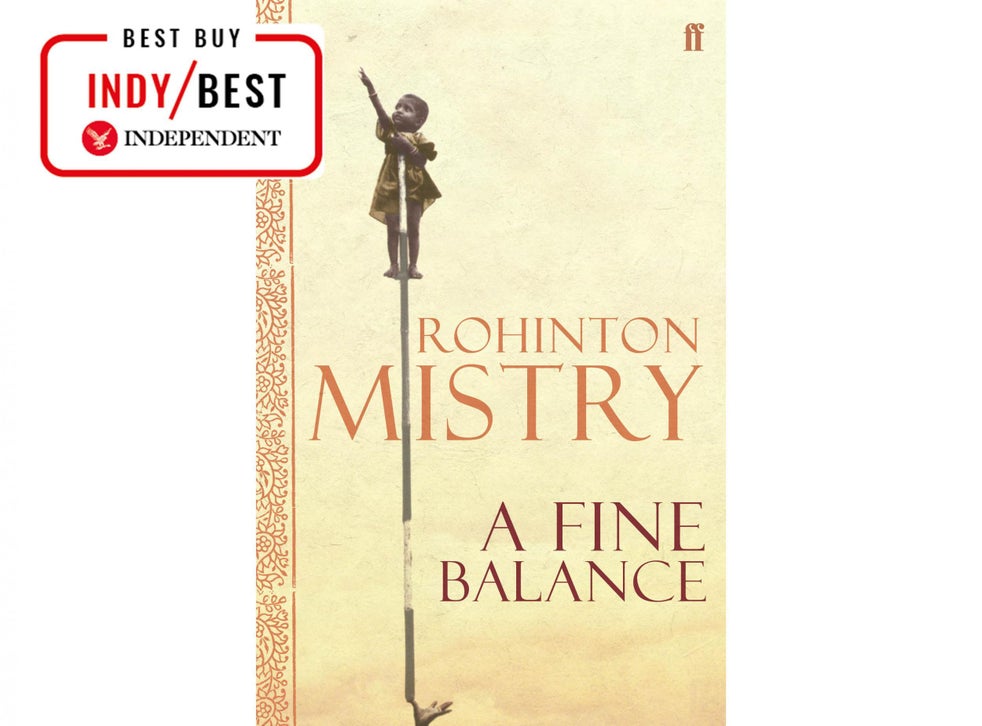
A Fine Balance’ by Rohinton Mistry, published by Faber & Faber: £9.99, Waterstones
Set in 1975, when prime minister Indira Gandhi declared a state of emergency due to civil unrest, this fine novel is the story of four strangers – a widow, a young student who has been uprooted from his idyllic hill station home and two tailors who have fled the caste violence of their native village. The quartet are thrust together, sharing a cramped apartment and facing an uncertain future in the middle of India’s political turmoil. Shortlisted for the 1996 Booker Prize, Mistry’s beautifully written novel is a literary tour de force.
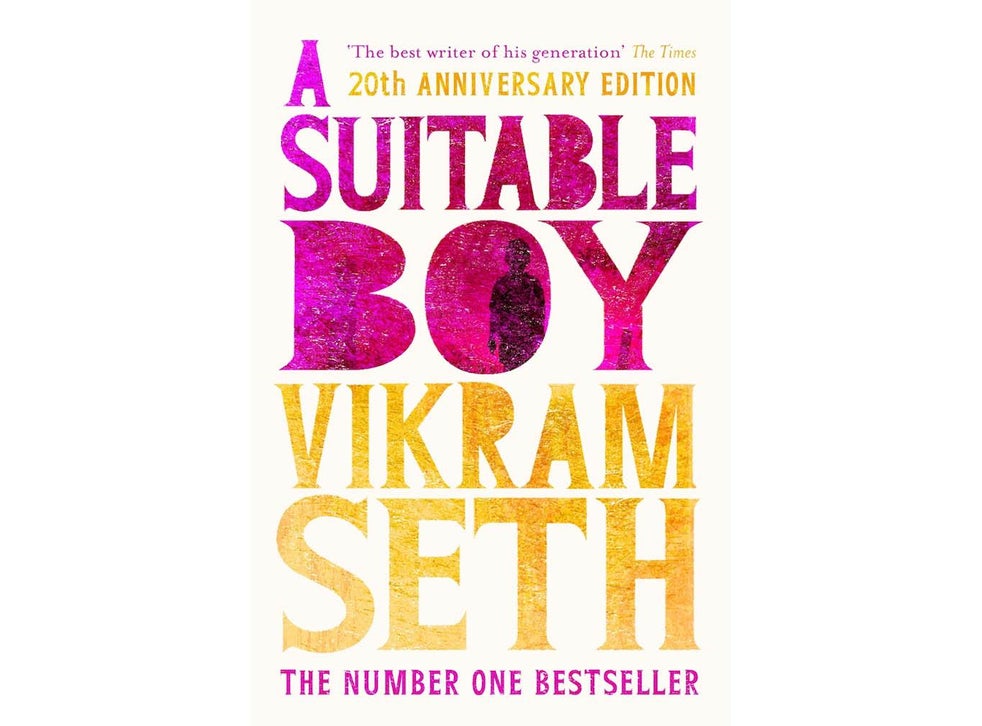
‘A Suitable Boy’ by Vikram Seth, published by Orion: £9.99, Amazon
Published in 1993, this huge tome – one of the longest novels published in a single volume in the English language – is a much-loved classic. Set in newly independent, post-partition India, it follows the stories of four families, focusing on Rupa Mehra’s efforts to arrange the marriage of her spirited student daughter Lata to “a suitable boy”. The first screen version of this epic story is currently being filmed in India and will be shown on BBC1 in late 2020. “It’s a charming, almost Austenesque story, with a delightfully relatable heroine, set against the turbulent background of India in the years following partition,” says TV screenwriter Andrew Davies.
‘The God of Small Things’ by Arundhati Roy, published by Harper Perennial: £8.99, Foyles
This ambitious debut novel took the literary world by storm when it was published in 1997. Roy had previously been working as a screenwriter, actor and aerobics instructor but within months her book had sold all round the world and scooped the Booker Prize. Set in the southern state of Kerala, it relates the childhood experiences of twins Estha and Rahel, who see their world shaken irrevocably by the accidental death by drowning of their visiting English cousin. Lyrical, magical and beautifully written, it’s the compelling story of intertwining family lives, birth and death and love and loss.
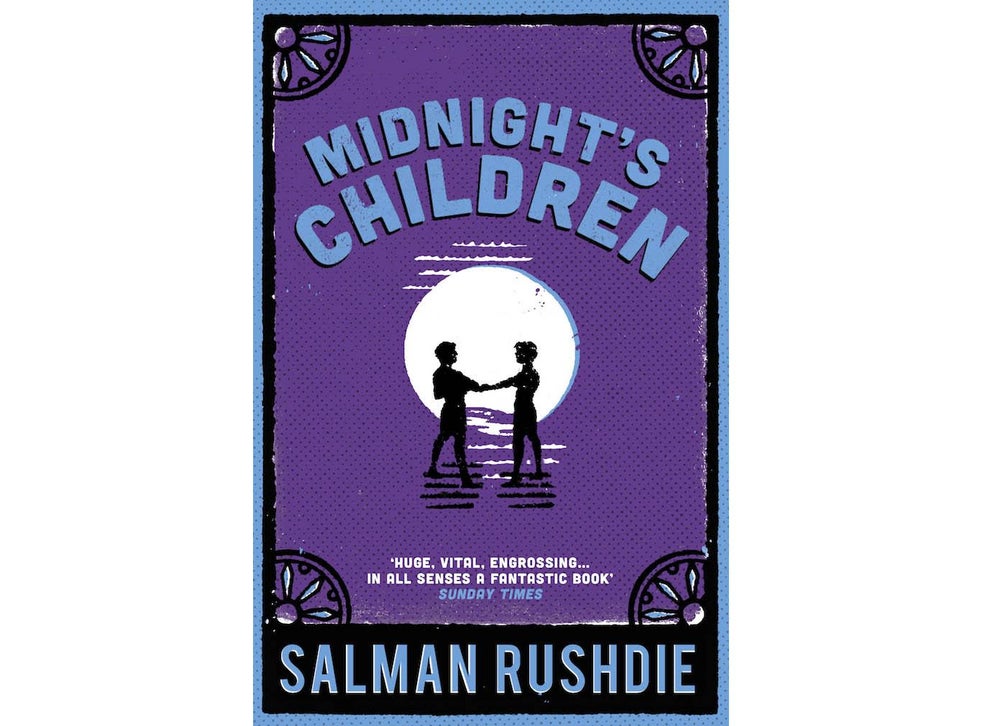
‘Midnight’s Children’ by Salman Rushdie, published by Vintage: £9.99, Waterstones
Salman Rushdie’s classic novel has been feted by Booker judges an astonishing three times. It won the Booker in 1981, was judged to be the Booker of Bookers for the award’s 25th anniversary in 1993 and in 2008 was voted the greatest Booker Prize winner of all time. Born at the stroke of midnight, at the precise moment of India’s independence, Saleem Sinai, the novel’s protagonist, is one of 1,001 “midnight’s children” – all of whom have special gifts and are telepathically linked. Rushdie says in the introduction to the novel that in the west people tend to read the novel “as a fantasy” while in India readers think of it as “pretty realistic, almost a history book”.
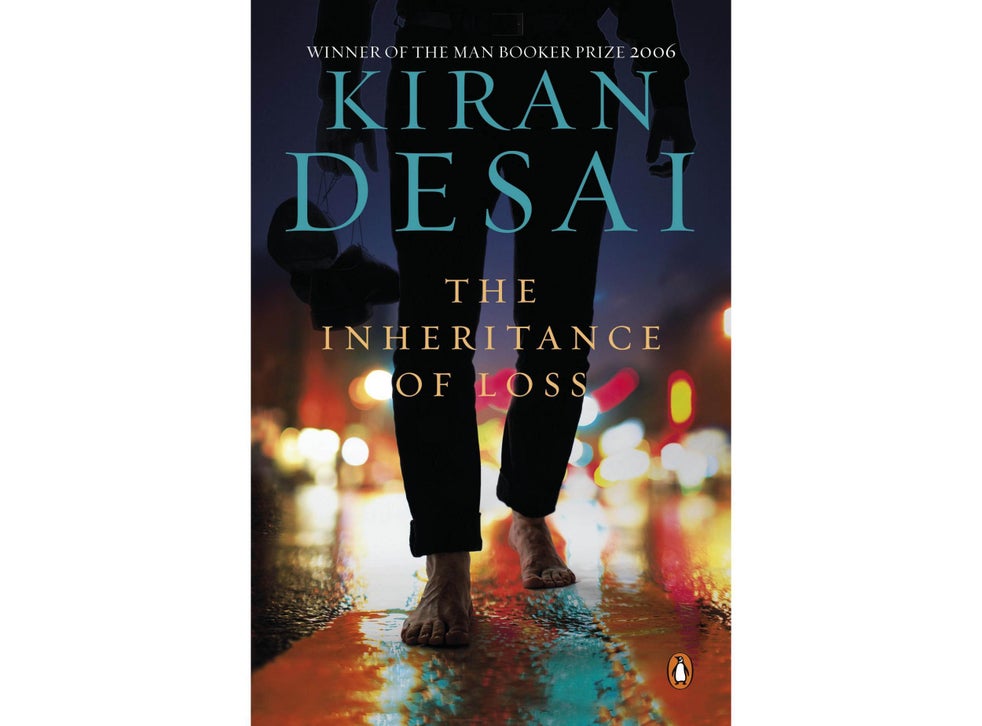
‘The Inheritance of Loss’ by Kiran Desai, published by Penguin: £6.99 Amazon
When Kiran Desai’s second novel won the Booker Prize in 2006 head judge Hermione Lee described it as “a magnificent novel of humane breadth and wisdom, comic tenderness and powerful political acuteness”. Set in 1986, it’s the powerful and very accessible story of a bitter old judge who lives in a dilapidated mansion high in the Himalayas, his orphaned granddaughter Sai, who has fallen in love with her tutor, and his cook, whose son Biju is working in New York and trying to stay one step ahead of the US immigration services.
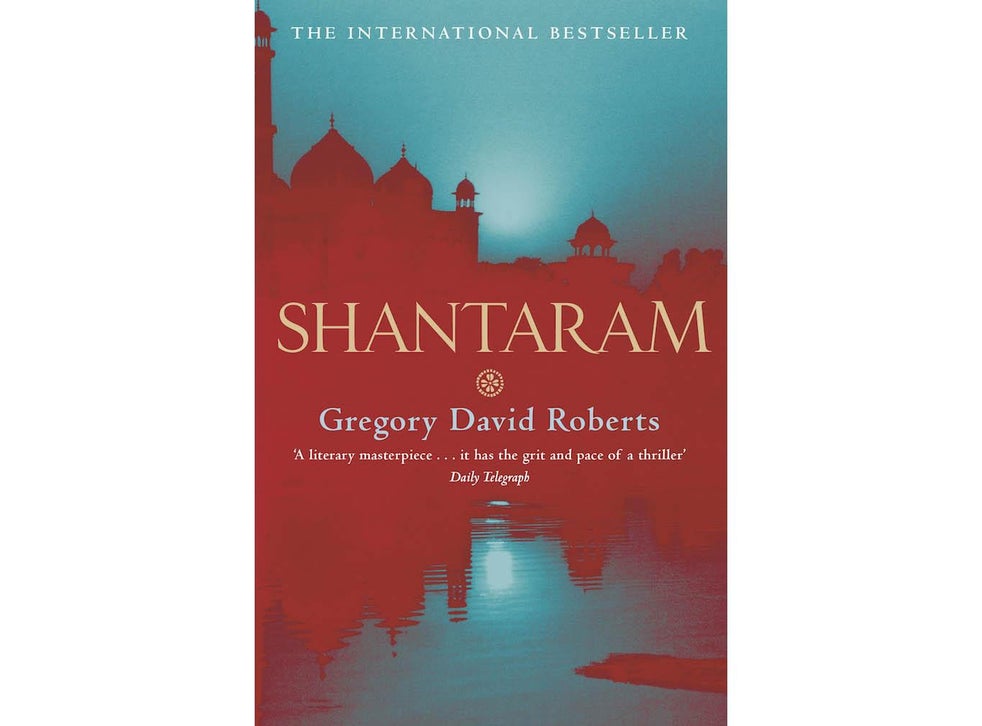
‘Shantaram’ by Gregory David Roberts, published by Abacus: £10.99, Foyles
Gregory David Roberts’s rollercoaster life reads like a thriller. An ex-armed robber and reformed heroin addict, he escaped from an Australian prison to India, where he lived in a Mumbai slum, launched a free health clinic, joined the mafia and worked in the Bollywood movie industry. This page-turning debut novel is based on his own experiences in the Mumbai underworld and runs to a hefty 900 pages.
‘The White Tiger’ by Aravind Adiga, published by Atlantic: £8.99, Waterstones
The enthralling story of Balram Halwai’s journey from “sweet, innocent village fool” to ruthless entrepreneur scooped the Booker Prize in 2008. This brilliant debut novel tells the searing tale of two Indias – one of them Balram’s home village, where sewage seeps down the road and children are “too lean and short for their age,” the other the city of Delhi, with its noisy shopping malls, traffic jams and slums. Look out for the film too – a Netflix adaptation is underway, with Rajkummar Rao and Priyanka Chopra in the lead roles.
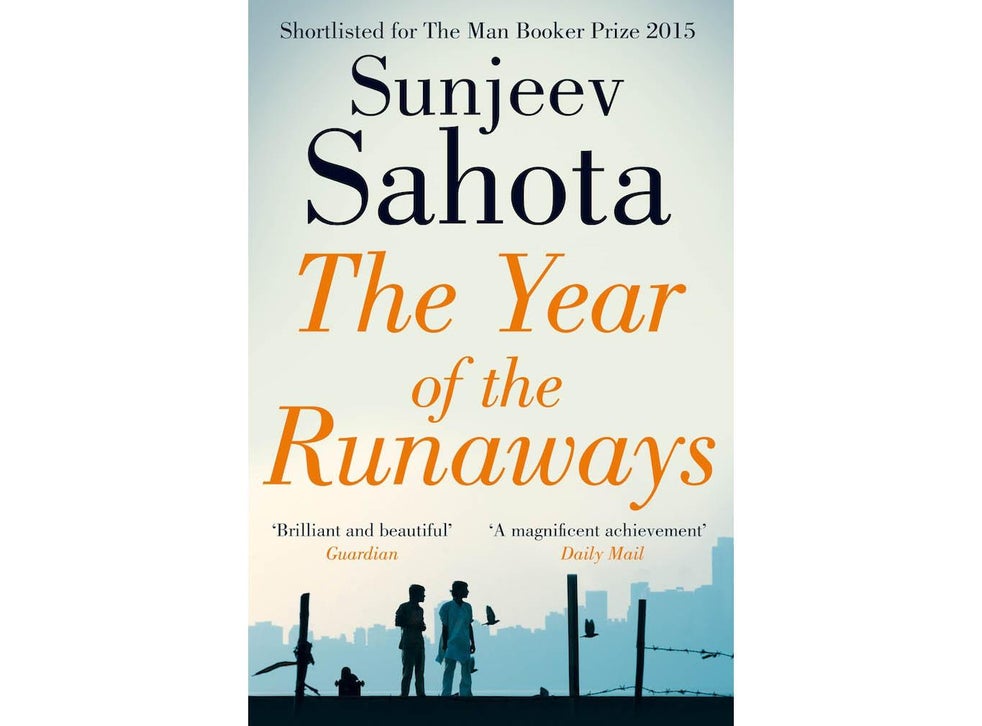
‘The Year of the Runaways’ by Sunjeev Sahota, published by Picador: £8.57, Amazon
Sunjeev Sahota’s second novel follows the lives of three migrant workers, Tochi, Avtar and Randeep, who flee India to look for work in England. The first half of the book features sections about their lives in India, relating their disparate reasons for moving to the other side of the world. Randeep marries to secure a visa, Avtar poses as a student and Tochi arrives in the UK on a fake passport in the back of a lorry. The book was shortlisted for the 2015 Booker Prize.
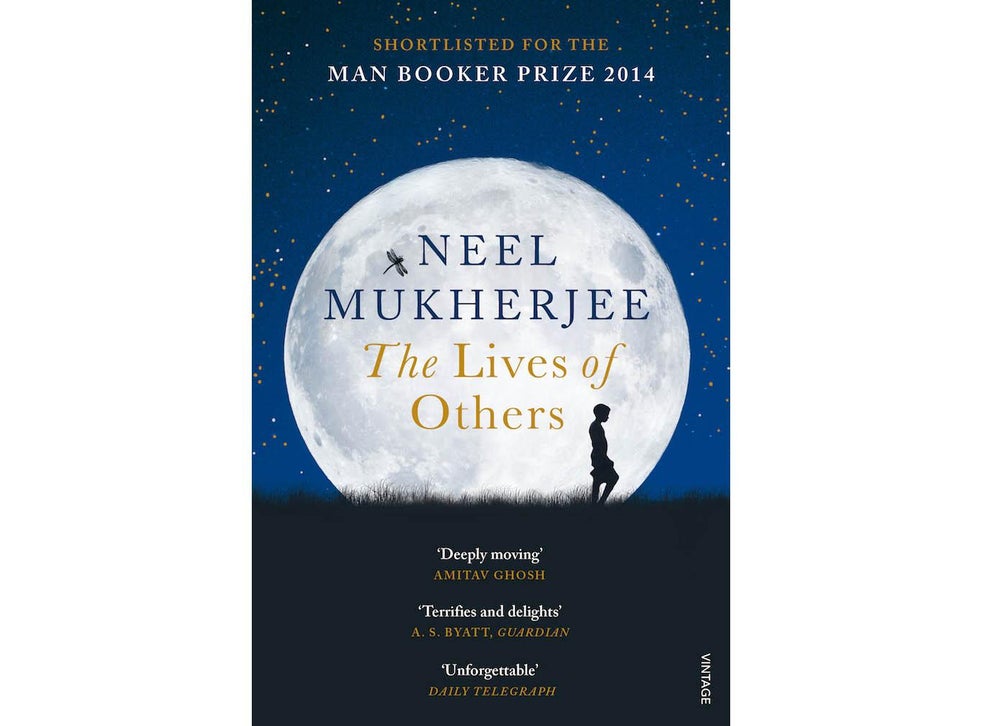
‘The Lives of Others’ by Neel Mukherjee, published by Vintage: £9.99, Blackwell’s
Shortlisted for the Booker Prize and the Costa Novel Award in 2014, Neel Mukherjee’s second novel is set in 1960s Kolkata and opens with the shocking account of a desperate man, who is unable to feed his starving wife and children and murders them before killing himself. This shocking scene is juxtaposed with the story of the wealthy Ghosh family, one of whom has become involved in extremist political activism. A powerful generational story of the chasm between the haves and have-nots.
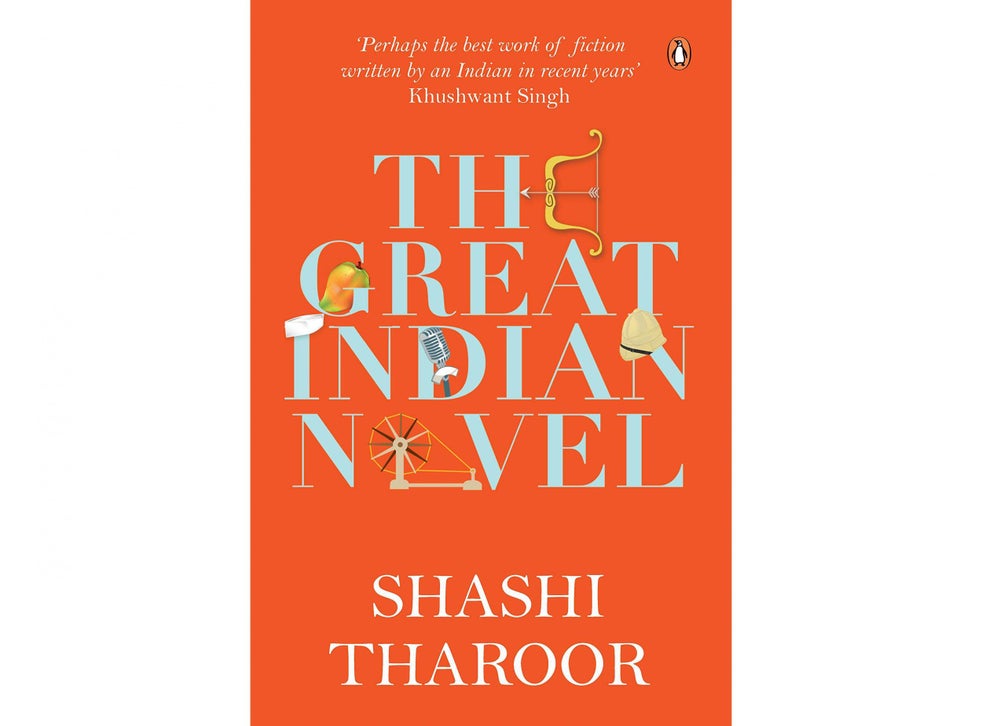
‘The Great Indian Novel’ by Shashi Tharoor, published by Penguin: £13.99, Waterstones
First published in 1989, this book has a big title but Shashi Tharoor makes it clear from the start that it’s in deference to “its primary source of inspiration” – The Mahabharata, one of the two major Sanskrit epics of ancient India. In Sanskrit Maha means great and Bharata means India. Tharoor uses The Mahabharata as a framework for this satirical novel about the major Indian political events of the 20th century, from British colonial rule through to “the struggle for freedom and the triumphs and disappointments of Independence”.
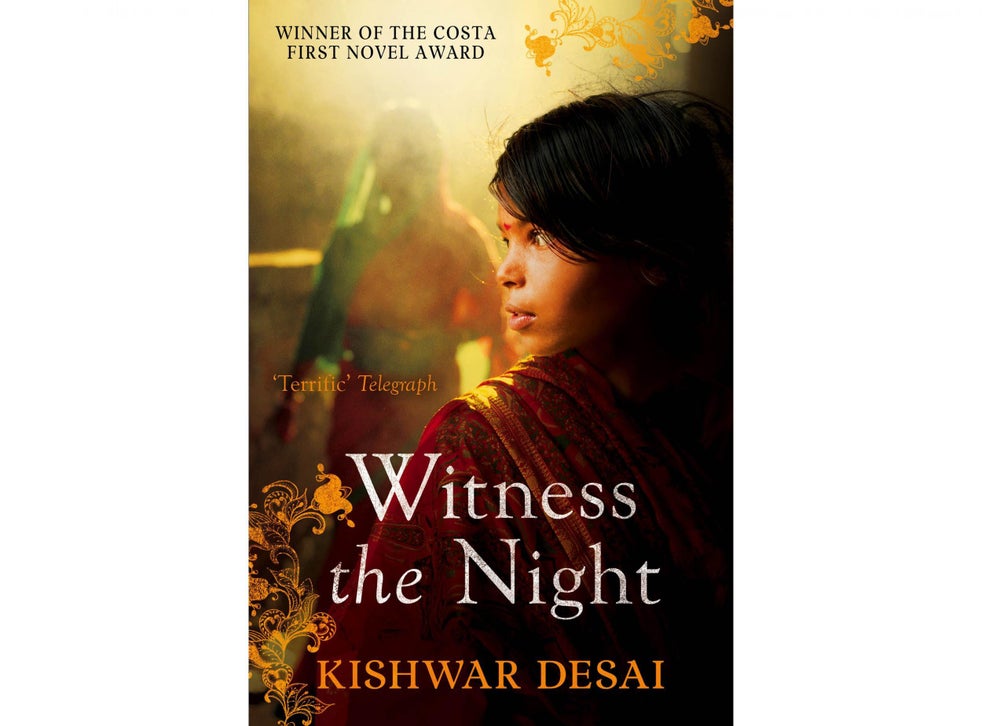
‘Witness the Night’ by Kishwar Desai, published by Simon & Schuster: £7.99, Amazon
When a traumatised young girl is found barely alive in a house where 13 people have been murdered, the local police assume she is the killer. But a feisty gin-swilling social worker brought in to review the case is convinced the girl has been framed and sets out to prove her innocence. Kishwar Desai wrote her stunning debut novel in just four weeks, driven by anger at the hidden scandal of killing baby girls that still exists in parts of India. It went on to win the Costa first novel award in 2010.
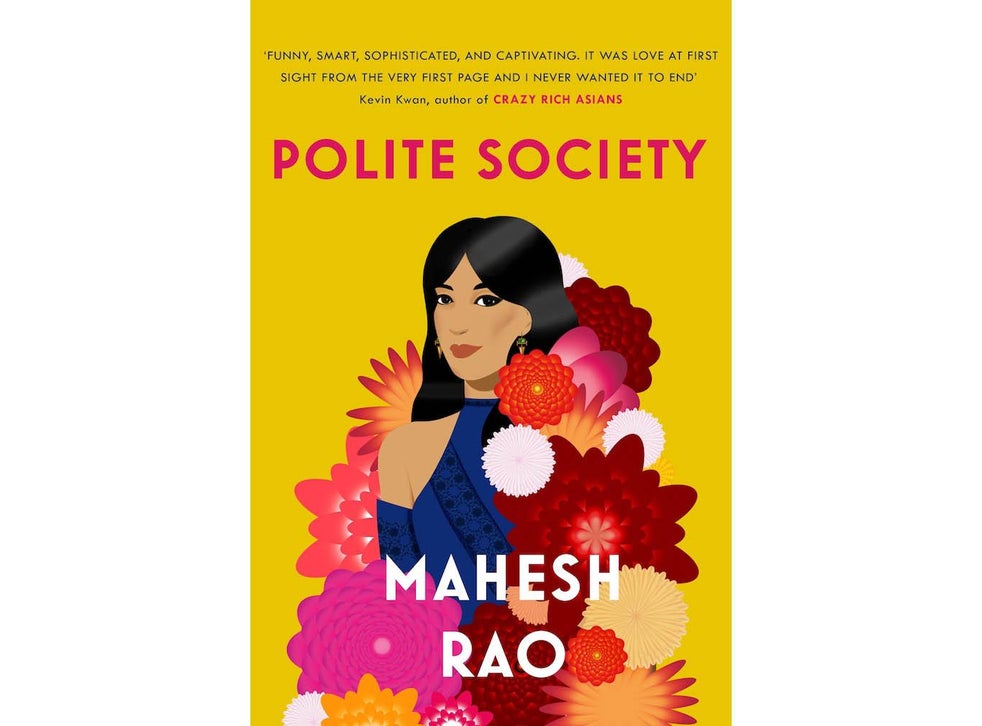
‘Polite Society’ by Mahesh Rao, published by Tinder Press: £14.99, Foyles
If you’re looking for a lighter read, try Mahesh Rao’s beautifully observed and witty second novel, a contemporary version of Jane Austen’s Emma. Ania Khurana is a spoilt, rich 25-year-old living in a luxurious Delhi mansion. She knows everyone who is anyone in the city but she’s bored and in need of entertainment. Following in Emma Woodhouse’s matchmaking steps, Ania first finds a husband for her spinster aunt, then sets her sights on doing the same for her friend Dimple, only to find that the path of true love doesn’t always run smooth.
Sabarimala Temple Opens, Devotees To Be Allowed From November 16 Sabarimala: The hill shrine of Lord Ayyappa in Sabarimala opened on Sunday evening for the annual two-month long Mandala-Makaravillakku season, adhering to strict COVID-19 protocol. Devotees would be allowed inside the temple only from Monday morning, temple sources said. No special pujas were held on Sunday. Melshanti A K Sudheer Namboothiri opened the doors of the sanctum sanctorum and lit the lamps at 5 pm in the presence of Tantri Kandararu Rajeevaru, heralding the start of the 62-day long pilgrim season. The newly elected Sabarimala melsanthi VK Jayaraj Potti and Malikkapuram Melsanthi M N Raj Kumar, were the first to climb the holy 18 steps and offer prayers. During Saturdays and Sundays, 2000 people would be allowed darshan. The health department has also made arrangements for antigen tests in various centres including all bus stands and railway stations at Thiruvananthapuram, Tiruvalla,Chengannur and K...
Mumbai Indians beat Delhi Capitals IPL Final 2020 LIVE Score, MI vs DC Match Updates: IPL Final 2020 LIVE Score, MI vs DC Match Updates: MUMBAI INDIANS ARE CHAMPIONS FOR THE FIFTH TIME! Back-to-back titles for Rohit Sharma's team. They have been the best side this season and they proved their worth once again. Preview : It's time for the big final in IPL 2020. Defending champions Mumbai Indians will take on Delhi Capitals in the summit clash on 10 November at the Dubai International Cricket Stadium. Mumbai, who are into their sixth IPL final and have four titles in their trophy cabinet, would be aiming for their fifth silverware. They have earlier won the IPL trophy in 2013, 2015, 2017 and 2019. The only time they did not win the title after reaching the finale was in 2010 when they lost to Chennai Super Kings. Standing in their way to the record fifth title are Shreyas Iyer's boys from Delhi. It would be the first final match for DC in history. They defeate...
The Story of Sudha Chandran – Despite physical disability, she became world class dancer Sudha Chandran , the Indian actress and classical dancer, born in Kerala. At the age of 16, she met with an accident . She was coming back from Madras with her parents, and they met the major accident that left Sudha Chandran with a fracture and some cuts. Unfortunately, while treatment was going on her leg, doctors missed a small wound in her ankle and plastered it! Later she came to know that the the gangrene is spreading throughout the leg. Whenever gangrene develops in the body, the body part has to be amputated to save the person’s life. Hence the difficult decision at this point she and her parents had taken is “ amputate the leg ” . Sudha’s leg was amputated in order to save her life. Here amputate means to surgically remove a limb for medical reasons. Her dream was to perform the dance at the international level! And because of t...






Comments
Post a Comment